Description
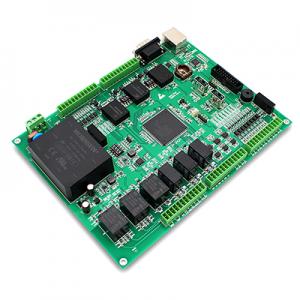
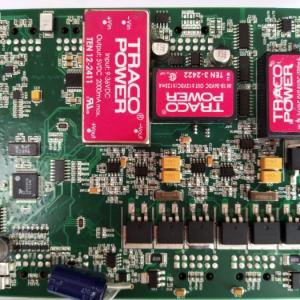
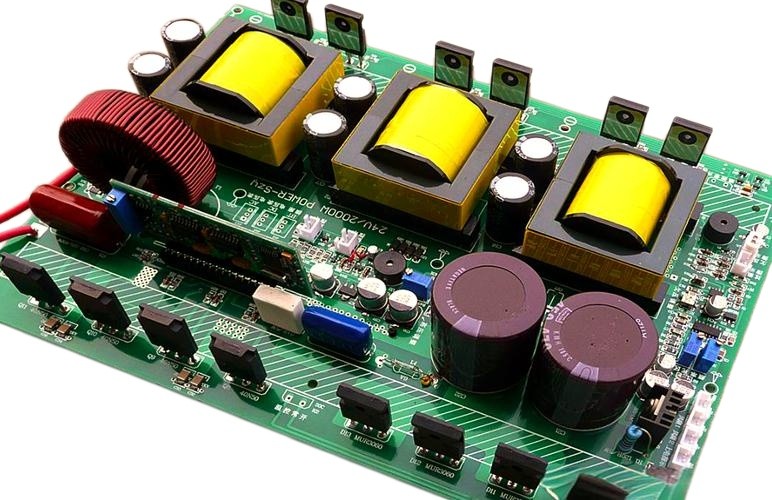
A power supply PCBA refers to a printed circuit board assembly used in power supply equipment. It integrates electronic components onto a PCB using surface mount technology (SMT) or through-hole technology (THT), forming a complete power module with functions such as power conversion, voltage regulation, and protection.
These PCBAs are widely used in switching power supplies, industrial power supplies, adapters, UPS, photovoltaic inverters, and other equipment. Core functions include AC-DC or DC-DC conversion, voltage regulation, overvoltage/overcurrent protection, and power factor correction (PFC). Their design requires a focus on efficiency, thermal management, electromagnetic compatibility, and long-term reliability.
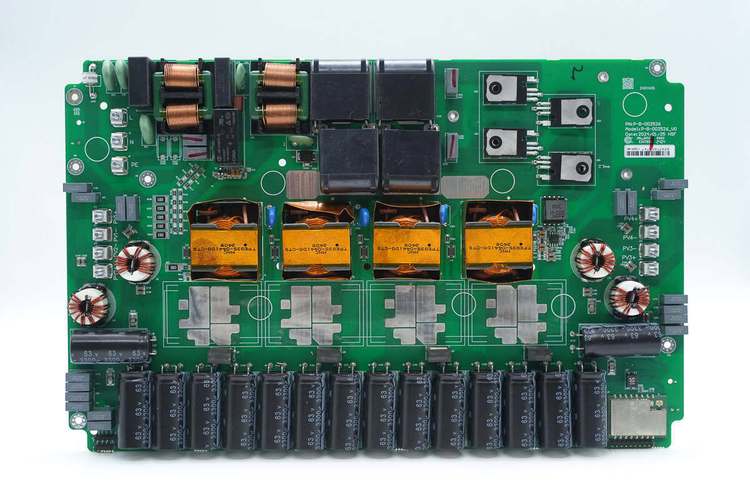
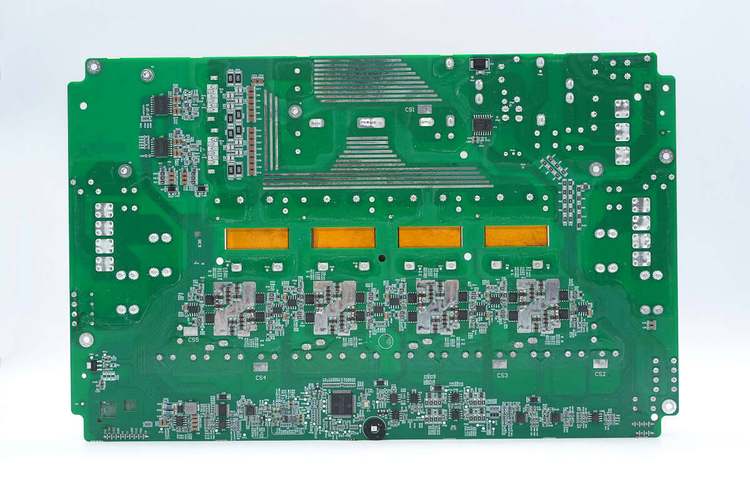
These PCBAs are widely used in switching power supplies, industrial power supplies, adapters, UPS, photovoltaic inverters, and other equipment. Core functions include AC-DC or DC-DC conversion, voltage regulation, overvoltage/overcurrent protection, and power factor correction (PFC). Their design requires a focus on efficiency, thermal management, electromagnetic compatibility, and long-term reliability.
Power supply PCBAs in industrial control systems possess core characteristics such as high reliability, wide operating temperature range, strong anti-interference capability, long lifespan, and high protection level, and are specifically designed for harsh industrial environments.
Compared to ordinary consumer power supply PCBAs, their key characteristics are reflected in the following aspects:
1. High Reliability and Stability: Industrial equipment often requires continuous 24-hour operation. Power supply PCBAs must operate stably for extended periods in environments with high temperature, high humidity, vibration, and electromagnetic interference, with extremely low failure rates. The design employs redundant power supply, multi-stage filtering, and soft-start mechanisms to ensure the system does not crash due to power fluctuations.
2. Wide Temperature Range Adaptability: Supports a temperature range of -40℃ to 85℃ or even wider, suitable for outdoor or extreme industrial environments. Component selection adopts industrial-grade or military-grade standards to avoid low-temperature failure or high-temperature aging.
3. Strong Electromagnetic Compatibility (EMC): To cope with complex industrial electromagnetic environments, the PCB layout incorporates independent power and ground layers, employing a multi-layer board structure for electromagnetic shielding. Critical signal lines utilize differential routing, and common-mode inductors and Y-capacitors are used to suppress conducted and radiated interference, meeting IEC 61000 standards.
4. Enhanced Thermal Management Design: Heat dissipation efficiency is improved through optimized component layout, increased heat dissipation vias, and the use of thermal pads or metal substrates. High-temperature lead-free solder is used to ensure that solder joints remain intact and do not crack under continuous high-temperature operation.
5. High Protection Level and Environmental Resistance: The surface is coated with a superhydrophobic nano-coating or conformal coating (moisture-proof, mildew-proof, and salt spray-proof), effectively resisting condensation, dust, and corrosive gases, making it particularly suitable for harsh environments such as tunnels, chemical plants, and mines. 6. Functional Safety and Certification Compliance: Meets functional safety certification requirements such as UL, CE (Industrial EMC), and CCC. Some products also require IEC 61508 functional safety standard certification to ensure safe operation in critical control scenarios.
6. Functional Safety and Certification Compliance: Meets functional safety certification requirements such as UL, CE (Industrial EMC), and CCC. Some products also require IEC 61508 functional safety standard certification to ensure safe operation in critical control scenarios.
7. Customization and Maintainability: Customized designs are provided according to the needs of different control systems such as PLCs, servo drives, and DCSs. Power supply integration supports industrial communication protocols such as Modbus and CANopen. Test points and diagnostic interfaces are also reserved for easy on-site maintenance and troubleshooting.
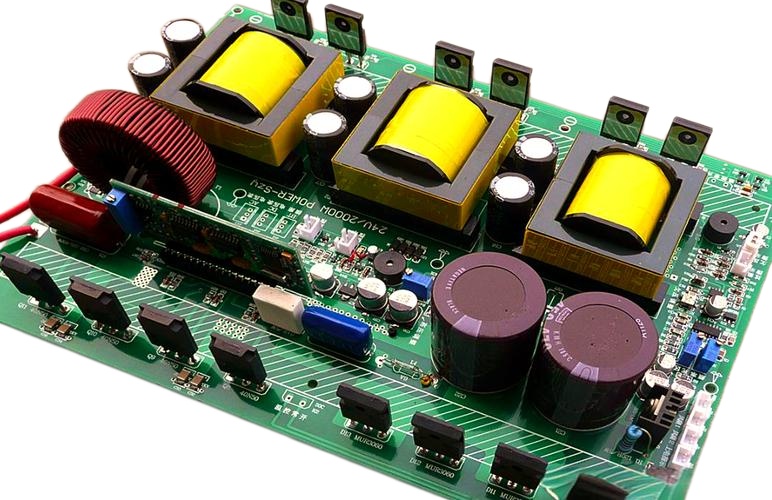
Industrial power supply PCBAs are high-reliability power circuit board assemblies specifically designed for industrial equipment. They are widely used in critical fields such as automation, energy, transportation, and medical, featuring wide operating temperature range, interference immunity, long lifespan, and high protection levels.
1. Industrial Inverter Control Board Power Supply PCBA: Used as the core control unit for driving motors (such as servo motors and three-phase induction motors), integrating a microcontroller, IGBT/MOSFET gate drivers, isolation devices, current/voltage sampling circuits, and communication interfaces (such as CAN and EtherCAT).
Features: High power density, strong electromagnetic compatibility (EMC), must comply with IEC 61800 standards.
Application Example: In intelligent manufacturing production lines, controlling the start, stop, and speed adjustment of conveyor belt motors to achieve precise cycle control.
2. PLC (Programmable Logic Controller) Power Supply Module PCBA: Provides a stable DC voltage for PLC systems, typically supporting a wide input range (85–264V AC) and redundant power supply design.
Features: Overvoltage, overcurrent, and reverse connection protection; hot-swappable; meets industrial-grade EMC and safety certifications (e.g., UL, CE).
Application Example: In chemical plant automation systems, provides a reliable power supply for PLC to continuously collect sensor data and execute logic control.
3. Industrial UPS (Uninterruptible Power Supply) Main Control PCBA: Enables seamless switching between AC and battery power, ensuring critical equipment continues to operate normally during power outages.
Features: Integrates PFC + DC-DC + inverter full-link topology; supports pure sine wave output; features remote monitoring and communication capabilities.
Application Example: In data centers or hospital operating rooms, ensures servers or medical equipment are not interrupted by sudden power outages.
4. Solar Inverter Power Management PCBA: Efficiently converts DC power generated by photovoltaic panels into AC power for grid connection.
Features: High conversion efficiency (>98%), supports MPPT (maximum power point tracking), and features anti-islanding protection and remote communication capabilities.
Application example: In large-scale photovoltaic power plants, multiple inverters work together to achieve a stable output of clean energy.
5. Industrial Gateway and Communication Equipment Power Supply PCBA Provides isolated multi-channel power supply for industrial routers, switches, IoT gateways, etc., supporting PoE (Power over Ethernet).
Features: Low-noise design, supports wide operating temperature (-40℃~85℃), meets industrial communication EMC standards (such as IEC 61000-4).
Application Example: In smart mines, it provides stable power to underground wireless communication gateways, ensuring real-time data transmission.
These PCBAs not only perform power conversion functions but are also the "heart" of stable operation of industrial systems; their design directly determines the reliability and safety of the equipment.
A key parameter comparison table for industrial power supply PCBA selection is ready to help you quickly match the needs of different application scenarios and improve design efficiency and reliability.
Parameter Category
General Industrial Equipment
Harsh Environments (e.g., Chemical, Mining)
High-Power Systems (e.g., Drives, UPS)
High-Frequency/High-Speed Communication Devices
Operating Temperature Range
-20℃ ~ 70℃
-40℃ ~ 85℃
-20℃ ~ 70℃
-25℃ ~ 75℃
Protection Rating
IP54 (Dust & Splash Proof)
IP67 + Conformal Coating/Nano Coating
IP54
IP54
PCB Substrate Type
High-Tg FR-4
High-Tg FR-4 or Ceramic Substrate
Heavy Copper Board (3–6oz)
High-Frequency Material (e.g., Rogers RO4000)
Copper Thickness
1–2oz
2oz
3–6oz
1–2oz (Impedance-Controlled Layers)
Thermal Management
Thermal Vias + Local Copper Pour
Metal Core PCB + Thermal Pad
Aluminum Base + Heat Sink Fins
Multi-Layer Ground Planes + Thermal Via Array
EMC Performance
IEC 61000-6-2/4 Compliant
Class A/B + Shielding Can Design
Multi-Stage Filtering + Common Mode Choke
Differential Routing + Strict Impedance Control
Component Grade
Industrial-Grade
Industrial/ Automotive-Grade
Industrial + High-Temp Electrolytic Caps
Industrial + Low-Noise LDOs
Safety & Certifications
CE, UL, CCC
IEC 61508 Functional Safety
UL1741 (Energy)
FCC Part 15, EN 55032
Typical Applications
PLC, HMI, Sensor Power
Mining Equipment, Outdoor Surveillance
Motor Drives, UPS, Inverters
Industrial Gateway, 5G Modules
- For high-humidity or corrosive environments, prioritize ceramic or metal-core substrates with conformal coating to ensure long-term reliability.
- In high-current paths (>5A), use heavy copper PCBs with parallel vias and follow IPC-2152 standards for thermal design.
- For high-frequency power delivery, select low Dk/Df materials and isolate power planes to minimize noise coupling.
- Always include test points and diagnostic interfaces in design for field maintenance and troubleshooting.
Recommendations for selecting heat dissipation materials for industrial power supply PCBAs in different environments
1. Typical Industrial Environments (e.g., factory automation, PLC control cabinets)
Temperature Range: -20℃ ~ 70℃
Heat Dissipation Requirements: Medium power consumption (10–50W), primarily natural convection
Recommended Material Combination:
PCB Substrate: High Tg FR-4 (Tg ≥ 170℃), thermal conductivity ≥ 0.8 W/m·K
Copper Thickness: 2oz (70μm) or thicker, with widened and extensive copper plating on critical power traces
Temperature Interface Material (TIM): Thermal grease (thermal conductivity ≥ 1.5 W/m·K) used between MOSFETs and heatsinks
Auxiliary Heat Dissipation: Localized use of aluminum heatsink fins, secured with screws to enhance contact
✅ Advantages: Moderate cost, mature technology, suitable for mass production.
2. High Temperature and High Humidity Environments (e.g., chemical plants, coastal areas, mines)
Temperature Range: -40℃ ~ 85℃, Humidity >80%
Heat Dissipation Challenges: Moisture corrosion + continuous high temperature → thermal stress accumulation + electrochemical migration risk
Recommended Material Combination:
PCB Substrate: Ceramic substrate (Al₂O₃ or AlN) or metal substrate (MCPCB), thermal conductivity ≥20 W/m·K
Surface Treatment: Immersion gold (ENIG) + conformal coating (acrylic or polyurethane) full coverage to prevent condensation corrosion
Thermal Conductive Material: Thermal pads (≥3.0 W/m·K, resistant to damp heat aging) to replace silicone grease and avoid "pumping out" failure
Structural Design: Conformal coating + sealed shell for double protection
✅ Advantages: Corrosion resistant, high temperature resistant, strong long-term stability.
3. High-power systems (e.g., UPS, inverters, motor drives)
Power consumption range: 50W ~ 1000W
Heat dissipation requirements: High heat flux density, requiring active or efficient passive cooling
Recommended material combination:
PCB type: Thick copper-aluminum substrate (3–6oz copper thickness) or copper-clad laminate (CCB), with thermal conductivity more than 40 times that of FR-4
via process: Resin filling + tin plating, improving heat conduction efficiency and mechanical strength
Heat dissipation structure: External large aluminum extruded heat sink + forced convection fan, or direct heat conduction with the equipment's metal casing
Thermal management: Adding a temperature sensor to achieve intelligent speed-adjustable fan control
✅ Advantages: Significantly reduces MOSFET/IGBT temperature rise (by 30–50℃), extending lifespan.
Example: In a 1000W industrial UPS, the main power transistors use a 6oz copper-copper aluminum substrate, and a heatsink keeps the junction temperature within a safe range.
4. High-Frequency/High-Density Equipment (e.g., 5G base station power supplies, industrial gateways) Features: Compact space, multi-layer boards, high-frequency loss and heat generation Recommended Material Combinations: PCB Substrate: High-frequency board material (e.g., Rogers RO4003C) or high thermal conductivity FR-4, balancing signal integrity and heat dissipation Inner Layer Design: A complete ground plane is used as a "heat diffusion layer," with heat conducted to the edges via a 16×16 via array Packaging Optimization: QFN/BGA devices are filled with thermally conductive adhesive to improve pad thermal conductivity Layout Strategy: Heat-generating components are distributed to avoid the formation of "hot spot islands"
✅ Advantages: Achieves efficient heat diffusion within a limited space, ensuring signal and power stability.
Example: In an industrial 5G gateway, the PMIC chip is surrounded by thermal vias that connect to the inner ground plane to achieve three-dimensional heat dissipation.
Summary and Recommendations:
Prioritize Conductive Path Design: Large-area copper plating + dense via arrays are fundamental and more effective than simply relying on external heatsinks.
Avoid Interface Thermal Resistance Bottlenecks: Select high thermal conductivity TIM materials and ensure uniform assembly pressure.
Simulation Verification is Essential: Use thermal simulation software (such as ANSYS Icepak) to predict hotspots in advance and optimize the layout.
Actual Closed-Loop Verification: Conduct temperature rise tests (full load operation for more than 2 hours) to ensure that the temperature at key points is below 80% of the device's Tj_max.